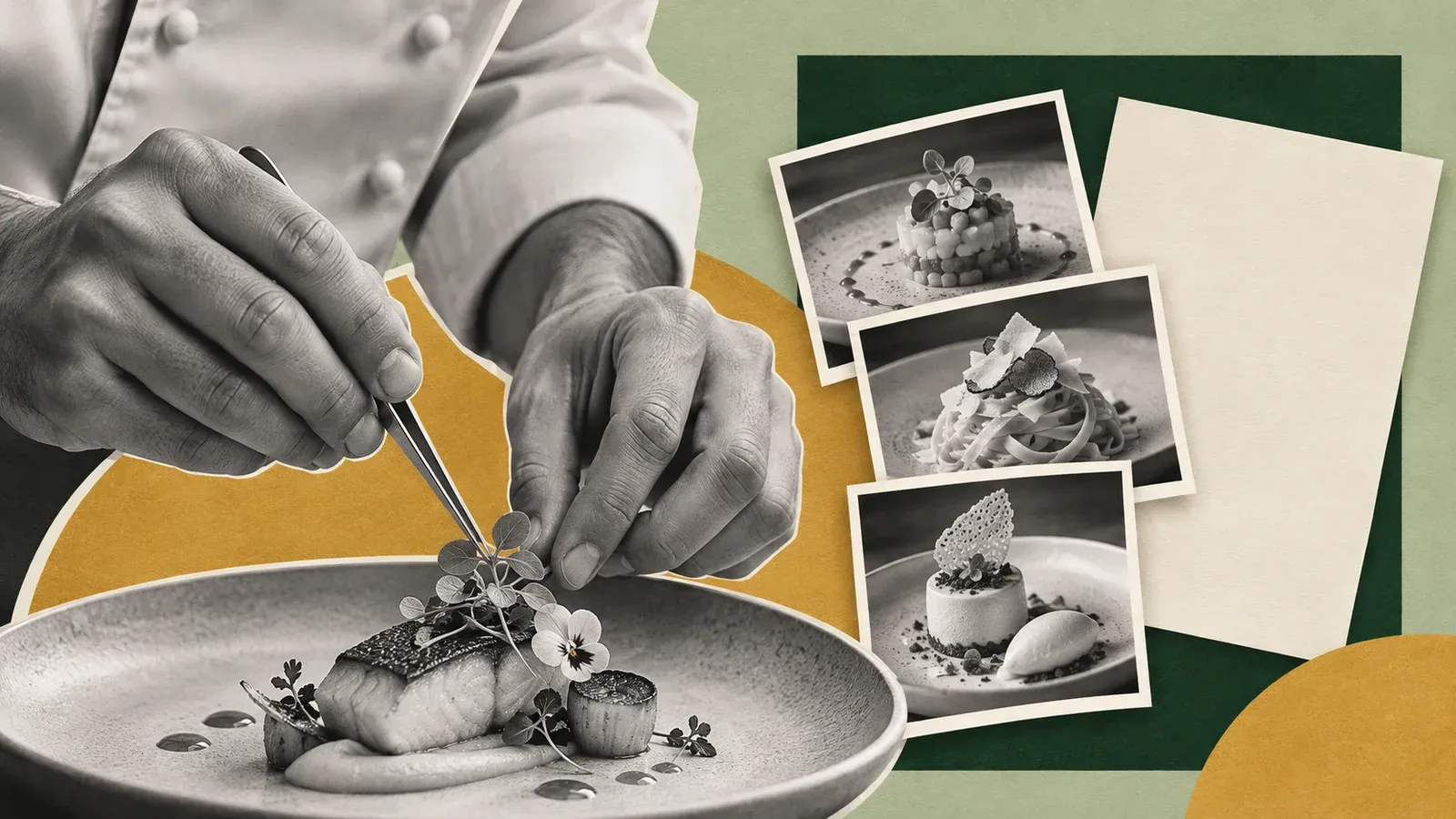
A chef CV and any optional portfolio should show what you can contribute to a kitchen and make your own work easy to distinguish from the team's. Use the CV for experience and responsibility, then use a small portfolio to explain selected dishes, techniques and service context. Attractive photographs without that explanation provide limited evidence.
The chef career guide helps you choose the right role. Build the application around the duties of that vacancy rather than sending every image you have collected.
Structure the chef CV around responsibility
State your recent employers, dates, role and sections. Explain preparation, service, handovers and any ordering or supervision you personally handled. Keep the official job title and describe its scope when the English equivalent is uncertain.
The general hospitality CV guide provides an example. Europass also recommends selecting experience relevant to the job. For a chef application, that means showing the section and service experience the hotel actually needs, with claims you can discuss at interview.
Select dishes that demonstrate relevant skills
Choose a manageable set that shows useful range rather than repeated versions of the same presentation. Depending on the vacancy, you might include preparation, a finished dish and a service example. Ask whether the hotel wants a portfolio and which format it can open.
Use photographs you own or have permission to share. Check permission for workplace images and avoid guest details, confidential recipes or other people's work presented as yours. An AI-generated dish image cannot demonstrate that you cooked it; use genuine evidence of your contribution.
Caption the work honestly
For each example, include dish or task, setting, your contribution, relevant technique and what you would explain in discussion. If the result was collaborative, state that clearly.
Here is a fictional caption structure, not a real dish claim: “Seasonal vegetable starter, training service. I prepared the vegetables and sauce and plated my allocated portions; the menu and final specification were set by the tutor. I can explain the preparation order and the feedback I received.” Replace the details with your actual work.
Do not use a photograph to imply responsibility for designing an entire menu. If you adapted an existing recipe under instruction, that can still show useful practical experience when described accurately.
Make the portfolio easy to review
Use a short PDF or a clear private link, with consistent captions and filenames. Test that another person can open it without requesting access unexpectedly. Keep an editable original and save the version sent to the recruiter.
Before submission, check each image against three questions: may I share it, what did I personally do, and why is it relevant to this kitchen? Remove an image if you cannot answer. Prepare to explain one choice, one challenge and one lesson from the work. Use the interview guide to turn the portfolio into a conversation rather than a slideshow of unsupported claims.